


Ozempic. It has landed in the laps of the celebrities. It has redefined the cultural fabric of all-things weight loss. And, it’s been deified as a ‘wonder drug,’ lowering blood sugar levels in those with Type 2 Diabetes while reducing the risk of major cardiovascular events like that of a heart attack or stroke.
In the Bronx, the borough with the highest rate of poverty, residents are being prescribed Ozempic and other GLP-1 drugs— notably Wegovy and Mounjaro– at some of the highest rates when compared to other New York City neighborhoods.
The difference, however, is that the tranche of Bronxites using these injectables are prescribed them based on whether they have a history of Type 2 Diabetes, rather than for weight loss.
The Northeast Bronx saw the Bronx’s highest GLP-1 usage with a 2.23% rate, firmly cementing itself as the third highest neighborhood in NYC where residents were users of Ozempic, Wegovy or Mounjaro. In Gramercy/ the Upper East Side, that figure was slightly higher – at 2.31%.

“Folks [in the Upper East Side/ Gramercy] are getting their hands on these medications in a more off-label way, and probably with an emphasis on treating obesity or being overweight rather than being focused on diabetes management,” said Dr. Allison Oakes, director of research for Trilliant Health, a healthcare analytics firm.
On the Upper East Side/ Gramercy, 26.57% of prescriptions for Ozempic, Wegovy and Mounjaro were written for those with a history of Type 2 Diabetes; meanwhile, for South Bronxites, that figure was nearly three times as high at 72.92%., according to a 2022 medical and pharmaceutical claims analysis by Trilliant Health.
In Queens, the highest cluster of GLP-1 users were bundled in the neighborhood’s Southeast constituency, with nearly 1.86% of patients taking a GLP-1 prescription. In Brooklyn, the Canarsie and Flatlands stretch saw the neighborhood’s highest usage rate at nearly 1.85% while in Staten Island, the highest bundle of GLP-1 users congregated in the south, with roughly 2.3% of residents on the prescription drug.
Of the patients prescribed a GLP-1 drug in these neighborhoods, more than 60% have a history of Type 2 Diabetes.
The Bronx has one of the highest prevalence rates of diabetes in New York state. These figures, however, explain a wider thread: for those looking to lose weight on this class of medications, rather than to treat diabetes, there is a fundamental and inequitable lack of access.
“As we see these drugs become more common and more focused on obesity, it certainly does raise an equity issue about if these drugs are getting to the people who perhaps need them most,” said Oakes.
GLP-1 drugs work by mimicking glucagon-like peptides hormones (GLPs) that are naturally produced in the body; GLPs help the pancreas make insulin when glucose levels are high, but, they also target the brain’s appetite centers to regulate hunger levels and metabolic function.
The results lend themselves to weight loss: patients on GLP-1 drugs feel satiated for longer, consume fewer calories and thus lose weight.
According to Dr. Judith Korner, professor of medicine at Columbia University’s Irving Medical Center and director of its Metabolic and Weight Control Center, there are three generations of medications that aid in the duopoly of both diabetes and weight loss: liraglutide, semaglutide, and tirzepatide.
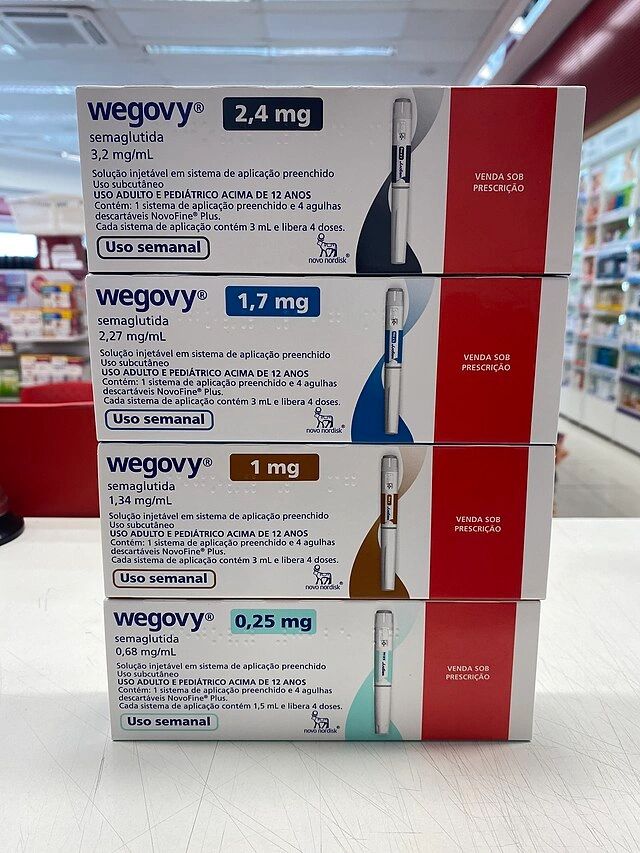
Semaglutide is the active ingredient found in both name-brands Ozempic and Wegovy, as manufactured by the Danish pharmaceutical firm Novo Nordisk. Despite their formulations proving identical, Ozempic is Food and Drug Administration (FDA) approved for the treatment of strictly diabetes whereas Wegovy is intended to treat obesity.
The dissonance of their usage, however, is the result of stringent insurance policy, rather than individual desire.
“Unfortunately, the prescriptions for these medications don’t reflect the need for the medications,” Korner said.
“It’s not that people may don’t want the medication for obesity treatment. It’s just depending on insurance coverage.”
New York State’s Medicaid Pharmacy program, NYRx, covers Ozempic and Mounjaro for the treatment of Type 2 Diabetes. In March earlier this year, the Centers for Medicare and Medicaid Services approved the prescription of Wegovy to prevent heart attacks and strokes in adults with obesity or are overweight.
Weight-loss, however, remains a barred diagnosis under NYRx’s Medicaid coverage, as based on wider federal and state rules.
Without insurance, one month’s supply of Ozempic stands at $968.52 whereas for Wegovy, it is $1,349.02. On NYRx, the Medicaid Pharmacy Program, that number shrinks to $25– according to GoodRx.
In May 2023, there were 731,835 people enrolled in mainstream Medicare in the Bronx, according to the New York State Department of Health. In Manhattan, that figure dipped to more than half, at 343,602.
Dr. Edwin Torres, a Nurse Practitioner based out of Montefiore Einstein’s South Bronx campus blames the prevalence of the Bronx’s high diabetes and obesity rates on a drought of healthier options, noting the food desert engulfing his clinic.
“Healthy food is very hard to come by. To try to find a place where you can get a salad, where you can have a healthy meal will be almost impossible to find. So, there’s access, but it doesn’t mean that you’re getting a [rich] quality of food.”
“[Medications] are a tool in the box that we use to treat our patients,” he said. “You think that people are not losing weight because they’re not exercising enough, they’re not eating healthy foods and that is only part of the puzzle,”
The Bronx Health REACH Coalition, a community coalition led by the Institute for Family Health, are also trying to widen the net through more holistic measures for those unable to afford these drugs out-of-pocket.
According to Diana Bernal, Program Coordinator at Bronx Health REACH, the organization has instilled robust schemes in schools to inform the next generation; the Creating Healthy Schools and Communities program, for instance, encourages physical activity during the day but also ways in which to make more nutritious choices.
“We try to focus on competitive foods, meaning foods that kids either purchase from bodegas or that they just bring from the outside into schools,” Bernal said.
“How can we create local wellness policies around this or physical activity to help not only the students but also the teachers and the surrounding community too?”
But for some, resorting to these GLP-1 drugs instead of simply eating cleaner and changing lifestyle habits may prove a game changer; but, their high cost is an inhibition to most, meaning they aren’t guaranteed.
Korner blames the sharp pricing of these drugs on the pharmaceutical industry’s “profit driven” incentive as well as insurance companies’ reluctance to cover them, rather than issues of supply and demand.
Obesity, and the challenge of ensnaring it, Oakes said, is the big question.
“Is [the solution] lifestyle modifications or does it need more medications?” asked Oakes.
“If things start moving in the latter direction, what are the potential unintended consequences of that? And I think that’s what we will need to keep an eye on moving forward.”
Leave a Reply